
Despite the recent decline in crude oil prices, the inflationary shock from the Middle East conflict continues to affect global supply chains due to persistent costs in areas like fertilizer, insurance premiums, and transportation. Companies remain burdened by elevated expenses for energy-intensive inputs and logistics, with agriculture and food supply chains facing the most enduring inflationary pressure.
Energy prices transmitted the initial shock from the Middle East war. Nearly four months later, oil has retreated, but fertilizer prices, insurance premiums and other war-related costs remain embedded in global supply chains.
Brent crude oil traded at $71 a barrel on February 27, the day before the war began. It averaged $117 in April before the August Brent futures contract fell to $72 a barrel on June 26 as oil shipments through the Strait of Hormuz began to recover.
The inflationary shock, however, is not over. Supply chains absorb abrupt price increases with a lag, leaving companies with elevated costs for energy intensive inputs, storage and financing even as crude prices decline.
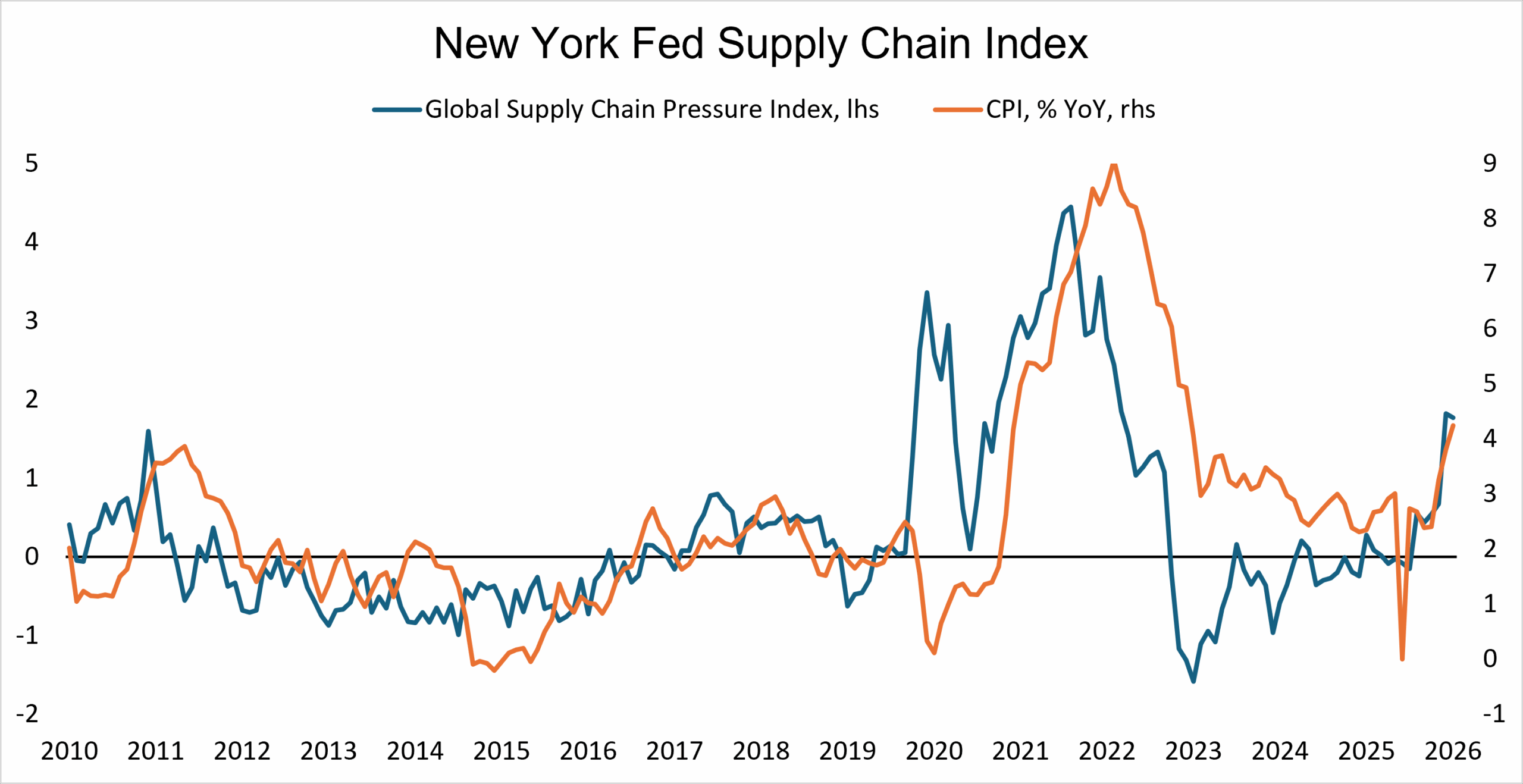
Source: Federal Reserve Bank of New York, U.S. Bureau of Labor Statistics, Prosera Chief Economist
Energy Was the First Transmission Channel
About one quarter of global seaborne oil trade normally flows through the Strait of Hormuz. So does one third of global seaborne fertilizer trade, about 16 million metric tons annually, along with significant volumes of liquefied natural gas.
The closure of the strait abruptly reduced energy and fertilizer shipments and increased the risks of operating in the Persian Gulf. The resulting energy price surge raised the cost of electricity, industrial production and energy intensive inputs. Businesses with high energy use or limited pricing power were especially exposed.
Although crude prices have declined, refined fuels remain more expensive than before the war. On June 25, marine bunker prices were down 25% from their March high and 12% from the beginning of June, but remained about 40% above February levels. Jet fuel had fallen more than 40% from its wartime peak but was still about 20% above its February level.
Freight Costs Remain Elevated
Higher fuel prices, route disruptions and capacity constraints raised international transportation costs. Air cargo reacted first as Middle Eastern airspace closures reduced capacity and forced aircraft onto longer routes. On March 10, South Asia to North America air cargo rates had risen about 50% from their prewar level.
The broader airfreight market remains strained. By mid June, Gulf airlines had restored only about 70% of their previous cargo capacity. The Freightos Air Index global benchmark was 10% below its May high but still 30% above both its level a year earlier and the prewar level.
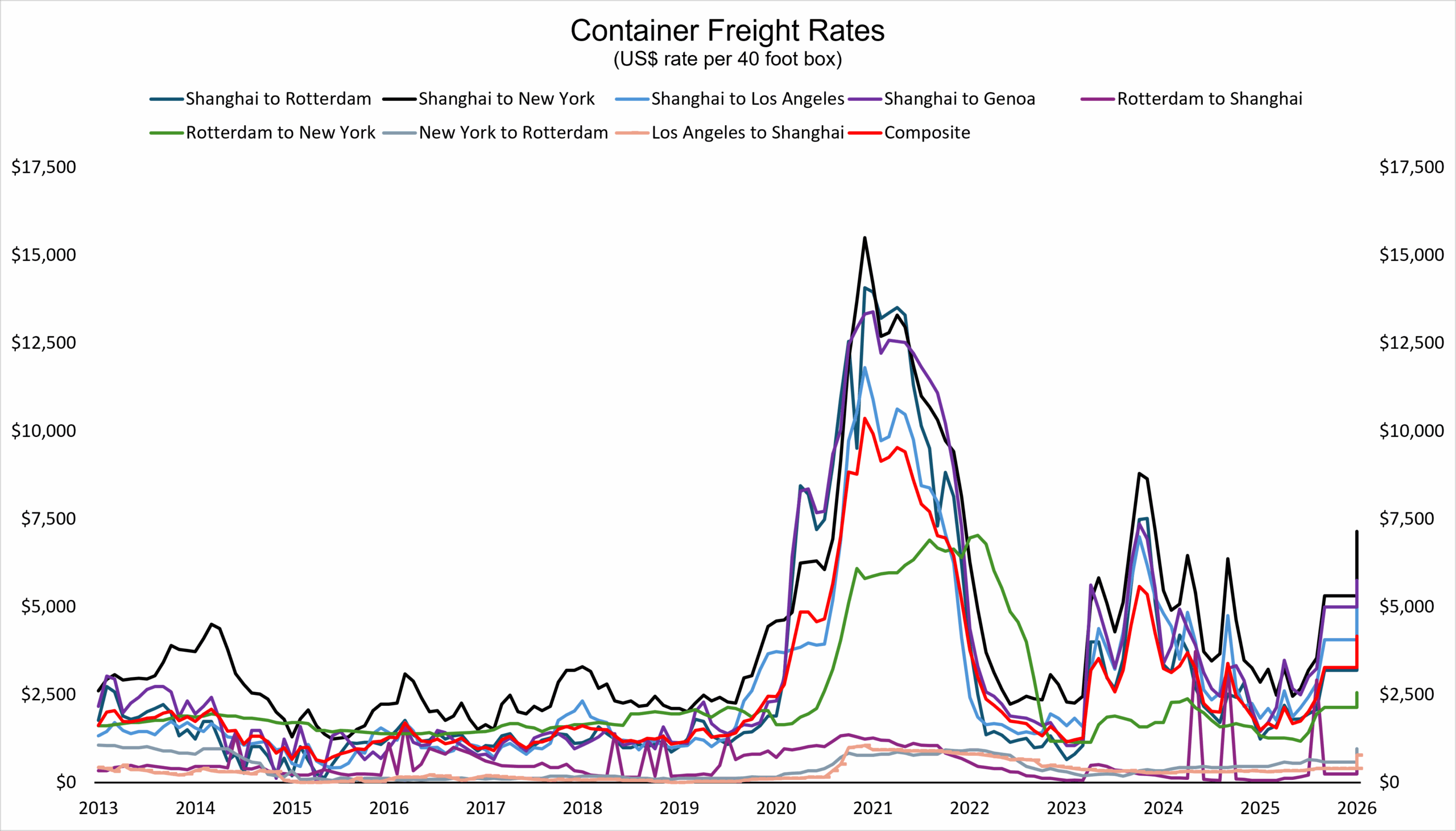
Ocean shipping costs increased more gradually. Transatlantic rates jumped 50% during the week ended April 14, from roughly $1,400 to more than $2,100 per 40 foot container, after carriers imposed emergency fuel and peak season surcharges.
Rates climbed again in the week ended June 25:
- Asia to U.S. West Coast rates rose 19% to more than $5,700 per 40 foot container.
- Asia to U.S. East Coast rates rose 13% to about $7,400.
- Asia to Northern Europe rates increased 13%.
- Asia to Mediterranean rates increased 16%.
These increases cannot be attributed solely to the war. An early peak season rush, frontloading ahead of tariff deadlines and planned bunker fuel adjustments were also contributing.
Source: Drewry World Container Index, Prosera Chief Economist
Insurance Turned Geopolitical Risk Into a Direct Cost
War risk insurance became another significant logistics expense. Before the conflict, war risk cover for Gulf voyages was commonly priced at about 0.25% of a vessel’s insured value. By March 6, brokers were quoting premiums as high as 3%, 12 times the previous rate.
At a 3% premium, insuring a $100 million vessel for a Gulf voyage would cost $3 million, compared with $250,000 before the war.
Premiums reportedly rose to about 5% later in the conflict before falling to about 2% following the ceasefire. Even then, the rate remained eight times its prewar level.
As of June 24, Allianz estimated that about 1,150 vessels carrying as many as 20,000 seafarers, with vessels and cargo valued at approximately $125 billion, were awaiting safe passage through the Gulf.
Mine clearance concerns, restrictions on inbound traffic and uncertainty over the durability of the ceasefire mean insurers and carriers are unlikely to treat the route as fully normalized in the near term.
Fertilizer and Food Supply Chains Face the Longest Lag
Agriculture is likely to experience the most persistent inflationary effects of the war. Natural gas is the principal production input for nitrogen fertilizer, while the Middle East accounts for nearly one quarter of global urea exports.
World Bank data show that urea prices exceeded $850 per metric ton in April, up 80% from February and at their highest level since April 2022. The World Bank projects that its fertilizer price index will rise more than 30% in 2026, with average urea prices increasing nearly 60%.
Higher fertilizer and energy costs can affect planting decisions, crop yields, food processing and distribution over several production cycles.
Global food prices rose 5% during March and April compared with the preceding two months. The World Bank oils and meals index increased 10%, while grain prices rose 3%.
Food and agricultural supply chains can therefore remain exposed long after crude oil markets stabilize.
The Most Affected Supply Chain Functions
Transportation and logistics: Fuel surcharges, route diversions, capacity constraints and war risk premiums produced the fastest and most visible increases.
Strategic sourcing and procurement: Buyers of fertilizer, chemicals, plastics, packaging and other energy intensive materials face higher and more volatile input prices.
Inventory and working capital management: Longer transit times, shipment delays and precautionary stockbuilding tie up cash and increase storage and financing requirements.
Manufacturing and conversion: Energy intensive producers face higher utility and feedstock costs, particularly in chemicals, metals, food processing and construction materials.
Agricultural production and food distribution: Fertilizer and energy costs can affect production volumes and consumer prices well beyond the initial shock.
Efficiency Is the Best Available Hedge
Supply chain leaders cannot control oil prices or reopen maritime chokepoints. They can reduce the degree to which external shocks flow through their operations.
This means improving load utilization, reducing empty miles, consolidating shipments, identifying alternative suppliers and routes, renegotiating fuel surcharge mechanisms and improving demand forecasts to limit emergency freight and excess inventory.
The crude oil spike has largely receded for now, but the costs it injected into global supply chains will take longer to unwind.